Wednesday, 14 June 2017

Micro endoscopic surgery in India

    Micro endoscopic Discectomy or surgery is a minimally invasive surgical procedure performed through a tubular device. This is an outpatient surgery for relieving pain caused by herniated discs pressing on nerve roots and other neuro spine problems.

http://www.thebrainandspine.com/micro-endoscopic-spine-surgery/
    The following are the steps of Micro Endoscopic Surgery:

Step 1: First, through a small incision a guide wire is inserted and pushed to the affected area. Using an X-ray machine called a fluoroscope the surgeon ensures the route to the herniated disc.

Step2: The guide wire is removed after inserting a series of dilating tubes which is passed over the guide wire to push down to the vertebrae.

Step3: A tubular reactor which is used to perform the surgery, is then slid over the dilating tubes. Once it is positioned over the bone surface, all the dilating tubes are removed.

Step 4: Then a surgical light and a small camera is used to see through the tube. By using surgical instruments the soft tissues and bone will be cleared to access the spinal canal.

Step 5: The surgeon then moves away the nerve from the herniated disc.

Step 6: The area is then cleared by removing the herniated disc and allows room for the nerve to move back to its normal position.

Step 7: Finally, the tubular reactor is removed and allows the body tissues to close around the surgery area and the surface is closed with a small bandage.

Advantages of Micro Endoscopic Surgery
  • Shorter hospital stay
  • Reduced post operative pain
  • Shorter recovery time
  • Less blood loss during the surgery
  • Reduced chance of infection 
  •  A few tiny scars instead of one large scar in a traditional surgery

         Gurukripa Advanced Neuro Care Institute of Dr Manish Vaish, one of the best Micro endoscopic neuro surgeon in Delhi offers advanced Microendoscopic spine surgery for herniated discs and other nerve problems with the help of top experts and advanced facilities. The doctor also provides recovery assistance for the patients who have undergone Micro endoscopic surgery in Delhi at an affordable cost.

    http://www.thebrainandspine.com/contact-us/
    Mail Us: thebrainandspinecenter@gmail.com

    Friday, 12 May 2017

    Scoliosis Surgery for Straightening Spine Curve

    Surgery is mainly used to treat severe scoliosis. The main aim of surgery is to improve a severe spinal curve. The result might not be a perfectly straight spine, but the main aim is to balance the spine and to make sure the curve does not get as worse as before. Surgery mainly involves stabilizing the spine and from keeping the curve from getting worse by permanently joining the vertebrae together.
    www.thebrainandspine.com


    Which are the things to be considered before surgery?
    Things which are considered before surgery include:
    • The age of the child.
    • The size, direction, and location of the curve present in the spine.
    • Whether any other treatment option such as bracing, has failed.
    When is surgery really considered?
    Surgery may be considered if:
    • The child has a moderate to severe curve and the curve is getting worse with time.
    • The child has pain or trouble doing his or her daily activities.
    Which are the different Surgery options?
    The main type of surgery for scoliosis involves the attaching of rods to the spine and doing a spinal infusion. Spinal fusion is mainly used to stabilize and reduce the size of the curve and also to stop the curve from getting worse. This is done by permanently joining the vertebrae into a solid mass of bone.
    Other techniques may also be used, including instrumentation with fusion. In this technique the devices such as metal rods to the spine are attached to stabilize a spinal curve. In this procedure there is no fusing of the spine together. This is only done in very young children when a fusion which stops the growth of the fused part of the spine is not desirable. The child has to wear a brace full-time after this surgery.
    Gurukripa Advanced Neuro Care Institute in Noida offers treatment and surgery for various kinds of the brain or neurological problems. Here, the doctor’s approach is based solely on the patient comfort.

    http://www.thebrainandspine.com/


    Visit Us: http://www.thebrainandspine.com/
    E-mail Us: thebrainandspinecenter@gmail.com

    Tuesday, 25 April 2017

    Micro Endoscopic Neuro Surgery

    Nowadays problems like stressful lifestyle, environmental degradation are some of the leading conditions causing Neuro Spine health related diseases and their acquired  fatal stages which leads to surgery. For a healthy living Neuro Spine health is immense, so we need proper treatment for Neuro Spine Disorders. Micro Endoscopic Spine Surgery or MES are setting new remedial paradigms to alleviate the sufferings.
        Over the past 30 years the consequent to the development of Microneurosurgical Instrumentation and procedures, currently we are enjoying the ''next step" in the evolution of Neuro Surgical capabilities with the introduction of Minimally Invasive Neurosurgery techniques. The main goal of the surgery is "Limited Exposure" which means limited injury to the surrounding tissues.

    http://www.thebrainandspine.com/micro-endoscopic-spine-surgery/


    Microendoscopy which uses optical fibers in conjunction with microscopy techniques to obtain microscopic images of tissue immediately adjacent to the imaging end of the endoscope inserted into the body. Compared with open surgeries Endoscopic Surgeries offers a faster recovery to the patients, less pain and helps them to resume normal activities faster.

        In this surgery we intend to reach pathology like a tumor through natural openings, like nostril or small incisions with minimal brain retraction. The endoscope inserted into this opening is used to visualize and perform the neurosurgical operation. While the surgery is performed with the help of the endoscope which displays real-time  video in the monitor. The rest of the surgery is done with similar techniques of open surgery, but  they will use special instruments and allows for less retraction and chance of injury to the brain.

    http://www.thebrainandspine.com/endoscopic-endoscope-assisted-brain-surgery/

    Compared to open surgery Minimally Invasive endoscopic brain surgery requires small openings and less brain retraction. The better visualization and less retraction makes the surgery safer. In addition less tissue disruption makes endoscopic neuro surgery less painful.    
        Dr. Manish Vaish has a  comprehensive experience in Neuro Surgery, Spine Surgery, Neurovascular Surgery, Minimally Invasive Neurosurgery (MIINS), Endoscopic Brain and spine surgery, Skull Base and Intracranial Neuroendoscopy.  Gurukripa Advanced Neuro Care Institute of Dr Manish Vaish situated in Noida, Uttar Pradesh is the best choice for advanced treatment for neurological and brain disorders.


    http://www.thebrainandspine.com/contact-us/


    Visit Us: http://www.thebrainandspine.com/
    E-mail Us: thebrainandspinecenter@gmail.com

    Tuesday, 21 March 2017

    Simplifying Treatment With Micro Endoscopic Surgery


    Endoscopy has taken over the field of surgery with its capability to simplify even complicated surgeries. Spine surgeries are considered to be complicated but with the advent of endoscopy or more precisely, microendoscopic surgery, they have been simplified. Initially endoscopy was used in for diagnosis only. Later with the technological advancement, they shifted to be the most common procedure of minimally invasive surgeries. Micro endoscopic surgeries are usually done with the help of a tiny video camera connected to the end of a tube-like scope, known as endoscope.
    http://www.thebrainandspine.com/micro-endoscopic-spine-surgery/

    In the case of micro endoscopic spine surgeries, the endoscope is inserted to the spinal area through small incisions created near it. The doctors can then view the area on a screen with the images transmitted from the camera on the endoscope. This view offers much more clarity and precision of anatomy to the doctors than the conventional surgical procedures.
    The small or micro incisions are used to insert the instruments required for the surgery along with the endoscope. The doctors perform the necessary functions based on the images on the screen. The surgery is done after administering local or general anaesthesia.
    Conditions requiring Micro Endoscopy Spine Surgeries
    Unlike conventional open back surgeries, the micro endoscopic spine surgeries require minimal invasion. They are performed in cases like bulging or herniated discs, Foramina stenosis, Spinal stenosis, pinched nerves, bone spurts and so on.
    The advantages of micro endoscopic surgery are many when compared to the conventional techniques. Since these are minimally invasive procedures, the blood loss and scarring associated with the procedure are almost negligible. Pain is also very less after the procedure when compared to an open back surgery. A shorter recovery time, of a day or less in hospital contributes to its popularity. It does not cause much damage to the adjoining tissues as well.
    Gurukripa Advanced Neuro Care Institute based in Noida, India offers advanced treatment for neurological and brain disorders. A state of the art infrastructure along with expertise of renowned micro endoscopic neuro surgeons and advanced endoscopy based surgical procedures contribute to its patient centric approach.

    http://www.thebrainandspine.com/contact-us/

    Visit Us: http://www.thebrainandspine.com/
    E-mail Us: thebrainandspinecenter@gmail.com

    Friday, 20 January 2017

    Immediate Stroke Treatment Can Increase Your Longevity

    When a brain vessel ruptures or gets blocked by a blood clot, it causes brain stroke. The treatments are given to either open the block or treat the rupture. Chances of survival can be increased if the stroke is identified and treated instantly. Strokes can be prevented by managing high blood pressure, atrial fibrillation, staying physically active and reducing or avoiding cigarette smoking.
    Among high-risk patients, medical treatments are used to control high blood pressure, manage atrial fibrillation.

    http://www.thebrainandspine.com/thrombolytic-therapy-for-stroke/

    Anticoagulants/ Antiplatelets
    Anticoagulant and antiplatelet make the body clot the blood and plays an important role in stroke prevention.
    Antihypertensive
    The antihypertensive medicine is used to treat high blood pressure. Depending on the medicine type, it can lower the blood pressure by opening blood vessels, decreasing blood volume or the rate of the force of heart contraction.
    When arteries have a buildup of plaque or blockage medical procedure like carotid endarterectomy may be performed. In this procedure, the fatty plaque is removed surgically from the carotid artery.
    Angioplasty / Stents
    To open up the blocked blood vessel or to treat cardiovascular disease doctors sometimes use implantable steel screens and balloon angioplasty method.
    Hemorrhagic Stroke Treatment
    Endovascular Procedures
    Certain hemorrhagic strokes are treated with endovascular procedures. When compared to the surgical procedure, the endovascular procedure is less invasive and the catheter is introduced through a major artery in the arm or leg, to treat aneurysm or AVM. Finally, a coil is placed there to prevent rupture.
    Surgical Treatment
    For hemorrhagic stroke or abnormal blood vessels tangle, the surgical procedure is done to immediately arrest the bleeding. If the bleeding is due to a ruptured aneurysm, a metal clip is placed at the base of the aneurysm surgically to deter the bleeding.
    Dr. Manish Vaish is one of the eminent Neurosurgeons in India who offers the best stroke treatment.


    http://www.thebrainandspine.com/contact-us/


    Visit Us: http://www.thebrainandspine.com/
    E-mail Us: thebrainandspinecenter@gmail.com

    Wednesday, 16 November 2016

    Subarachnoid Hemorrhage Treatment

    The subarachnoid space is the space where the cerebrospinal fluid circulates and is responsible for protecting the brain from serious injuries by helping as a cushion. Subarachnoid hemorrhage (SAH) is known as bleeding within the subarachnoid space which is the area between the brain and tissues that cover the brain. Any kind of injury in the subarachnoid space might cause stroke, paralysis and even sudden death.
    Symptoms of Subarachnoid Hemorrhage (SAH):
    During the SAH development, it gives several symptoms. The main symptom is sudden onset of a severe headache at the skull base. Some people will have popping sensation in the head before the start of SAH. Other SAH symptoms are
    • Nausea, vomiting
    • Shoulder pain, Neck pain
    • Confusion, irritability
    • Light sensitivity, decreased vision
    • Alertness loss
    • Numbness in the entire body
    • Seizures

    http://www.thebrainandspine.com/subarachnoid-hemorrhage/

    Causes of SAH
    The causes of SAH arise from various factors. The main causes are said to be
    • Bleeding disorders
    • Berry aneurysm (an aneurysm is an abnormality in the brain arteries)
    • Usage of blood thinners
    • Bleeding from an arteriovenous malformation
    • Weakening of artery or a balloon-like bulge that ruptures and releases blood into the subarachnoid space around the brain (Aneurysm)
    • Brain injury
    Subarachnoid Hemorrhage Diagnosis:
    During the physical examination, SAH is mostly detected. The patient may be found with a vision problem and stiff neck. To know more about the hemorrhage severity some tests will be prescribed by the neurosurgeon to give the patient a proper treatment.
    • Computerized tomography (CT) is followed with contrast dye procedure to get a precise conclusion
    • MRI scans provide detailed brain images
    • A transactional ultrasound that detects the blood flow in the arteries within the brain
    • In Cerebral angiography, X-rays are taken with injected dye to detect the brain blood flow
    Subarachnoid Hemorrhage Treatment:
    Instant treatment will save the life and prevent the possibility of brain damage.
    • To stop the bleeding surgery is performed to clip the aneurysm
    • After clipping the aneurysm, a craniotomy is performed to close the aneurysm. Endovascular technique may be used to reduce the risk of further bleeding
    • If SAH causes coma, the patient is supported with artificial ventilation, placing draining tube in the brain to relieve pressure
    • If the patient does not lose consciousness strict instruction will be given by the doctor to get relieved from brain pressure
    • Medications may be prescribed for relieving severe headache, regulating blood pressure through intravenous, preventing seizures.
    Gurukripa Advanced Neuro Care Institute in Noida offers various kinds of treatments and surgeries for brain and all neurological problems. Dr. Manish is a renowned Neurosurgeon in India, who has performed thousands of surgeries and offers state-of-art treatment to cure the patients successfully.

    http://www.thebrainandspine.com/contact-us/


    Visit Us: http://www.thebrainandspine.com/
    E-mail Us: thebrainandspinecenter@gmail.com


    Saturday, 3 September 2016

    Comprehensive Brain Tumor Surgery in New Delhi

     The brain is an extremely sensitive organ in our body. Any damage or defect will result in life threatening implications. Gurukripa Advanced Neuro Care Institute offers Best  Brain Tumor Surgery in New Delhi.
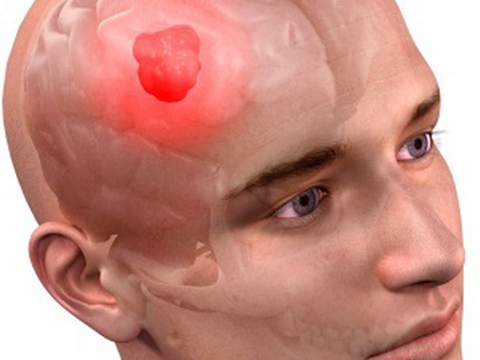
    The human brain is a part of Central Nervous System protected by the skull. A brain tumor or intracranial neoplasm is a condition that arises due to the unprecedented growth of cells in the brain. Its major two types are cancerous tumors and benign tumors. Its major symptoms include:

    • Severe headache
    • Extreme weakness
    • Coordination problems and stiffness in brain
    • Occasional fainting
    • Stuttering while speaking
    • Difficulty in viewing
    • Mood swings
    • Seizures

    025-How-to-Know-if-a-Headache-is-a-Symptom-of-a-Brain-Tumor.jpg

    Types of brain tumor surgery are:
    • Craniotomy: This is the most usual tumor surgery done. In this tumor and a bone is removed, later the bone is dispatched for biopsy test. The surgery is done using the following techniques Extended bifrontal craniotomy, Eyebrow” craniotomy, “Keyhole” craniotomy , Orbitozygomatic craniotomy, “Keyhole” craniotomy.

    • Shunt: When fluid clogs the brain, VP or Ventriculoperitoneal shunt is used to release the pressure. Pressure builds up in the brain when a tumor blocks the flow of the brain fluid. A drainage system will be inserted into the brain to get rid of the blocked fluid into the cavity.

    • Stereotactic surgery:  By using computers three-dimensional image called stereotaxy is made. It finds out the correct location of the tumor. After this tumor is removed and radiation pellets is implanted.

    • Embolization: This is performed before the brain surgery to block blood flow in the arteries. Otherwise it will cause implications after the surgery.

    • Endoscopy and endoscope-assisted surgery : In highly impenetrable areas like brain endoscope  a tool is used to view interior parts through small openings. This immensely helps the surgeons to find out the exact location of the tumor.
    Dr. Manish Vaish the famous Neurosurgeon provides best brain surgery in Noida.

    contact-us.jpg
    Mail us: thebrainandspinecenter@gmail.com